The Odyssey of the Marketer 6.0 in the Age of AI
I haven’t read the Odyssey, but I did see the version by the talented director Christopher Nolan, a master of his craft, who contributed to the film’s commercial success. It has passed one billion dollars worldwide and counting, as its run in theaters has been extended into September. But this is not a film magazine; it’s a marketing magazine.
Before AI arrived in November 2022, we in marketing felt we had won the battle of Troy, and that our secret weapon, our Trojan horse, was digital marketing, mobile marketing and automation. As Grewal et al. (2025) point out, we were living in the era of technology-augmented marketing, built historically on the era of simple transactions, followed by the production era, the sales era, the marketing era and the value-based marketing era, until we arrived where we are today.
Our journey home, that is, toward consistent success for the company by creating value for the consumer, was interrupted by artificial intelligence. First came the giants that Odysseus and his men faced: we didn’t know how to respond or how to use this new technology, and it wasn’t just one giant, OpenAI, but also Anthropic, Gemini and more. The journey continued with the song of the sirens: believing we had mastered AI because we knew how to write prompts. But the challenges kept coming, like the Cyclops: trapped with a single AI model, as if in the cave, never leaving, sticking with one model without knowing there was more outside. And when we finally dared to try other platforms, we ran into the witch, where reality is not necessarily the truth: AI’s hallucinations and confabulations. Trust, but verify.
What we have learned is no longer enough. AI’s challenges keep coming because it is a constantly evolving technology, and you might say, “I’ve mastered it.” That’s when, for anyone who thinks they’ve mastered it, the sea monster smashes their lifeboat; they are shipwrecked and left stranded with that knowledge on an island, in the comfort zone with Calypso.
Because marketing today is an odyssey: an unfinished journey, the constant quest to get home by achieving the desired results. To do that, we have to keep evolving, taking the risk of getting to know the platforms, going beyond prompts to conversational programming with AI (vibe coding). And in academia, as Grewal et al. (2025) propose in their article on the future of marketing, we must keep learning about AI, robots, digital marketing, big data, marketing analytics and sustainability.
To take control of our kingdom and bring peace to it, we must modernize, streamline and integrate our marketing plans. AI doesn’t do everything, but it’s not as if it does nothing. It should help us expand our human potential, but you decide how; otherwise, AI will control you, like Calypso. And if you reach the kingdom, remember that keeping the peace is a constant effort.
Therefore, the marketer’s odyssey never ends. Although we do know how the Odyssey ends, no one knows how the odyssey we are living with AI will end or where we are headed; we only know that it keeps unfolding, and that is part of the journey. It’s overwhelming, yes. We’re confused, yes, all of us, and anyone who says otherwise is lying. Companies and academia are in the same position, each fighting its own battle to understand how to get the most out of this technology, how to work with it, operationalize it and see results.
But even though we are confused and overwhelmed, we shouldn’t wait to see whether someone comes to rescue us. We must always set out on our own odyssey, with its ups and downs, and the engine must always be curiosity: knowing how to solve problems, helping others and continuing to move forward in this era of the marketer 6.0, the era of technology-augmented marketing.
We can already see rafts, like the ones that saved Odysseus from Calypso’s island on his way to his kingdom: companies establishing ethical rules for the responsible use of AI, and governance policies on how to use customer information with AI.
It’s not necessarily a gloomy future; it’s an uncertain future, like any future, but it depends on each marketer what future they envision on their horizon. If you want to move in the right direction, keep reading, learning and training.
There are no magic formulas for anything, but there is progressive learning, and AI demands that we keep learning constantly. That encourages and motivates me. It’s exhausting, yes, but I don’t want to stay on the island of complacency, nor do I want that for my colleagues and students, or for their companies and customers.
And to close, my favorite scene: when Odysseus and his men speak with the dead, those same ghosts pursue them, and they manage to escape. That is how we should always learn from our mistakes, failures and areas for improvement: we shouldn’t fear them, but face them and learn from them so that, as much as possible, we keep improving and they don’t catch us.
So enjoy the journey, enjoy the odyssey that never ends, because that is what makes marketing such an attractive field: everything is always changing. Bon voyage.
References
Grewal, D., Guha, A., Beccacece Satornino, C., & Becker, M. (2025). The future of marketing and marketing education. Journal of Marketing Education, 47(1), 61–77. https://doi.org/10.1177/02734753241269838
Zuckerman, E. (2026, August 10). The summer that the monoculture made a comeback: The World Cup, Taylor Swift’s wedding and ‘The Odyssey’ brought us together. The Wall Street Journal.
Author: Dr. Carlos Valdez
Date: July–August 2026
Editorial assistance: Claude.
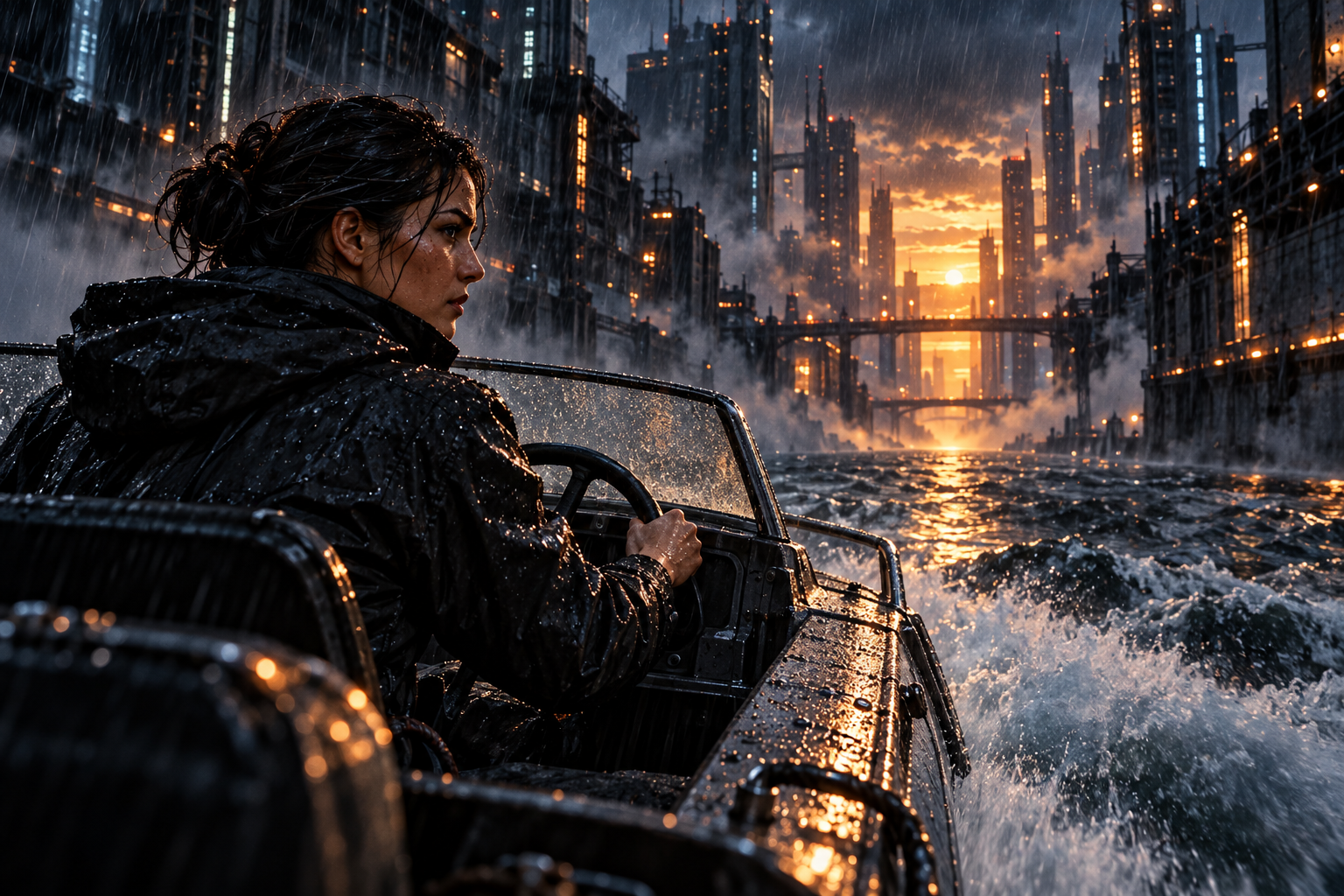
Image generated with: ChatGPT and Gemini.
Publication: Revista Mercadotecnia y Ventas.
© All rights reserved, Revista Mercadotecnia y Ventas 2026.
Reproduction without the author’s permission is prohibited.
Editorial syndication: This content is available for syndication. For editorial licensing or collaborations, contact carlos.valdez@mercadotecniayventas.com