Case Study — Issue #1
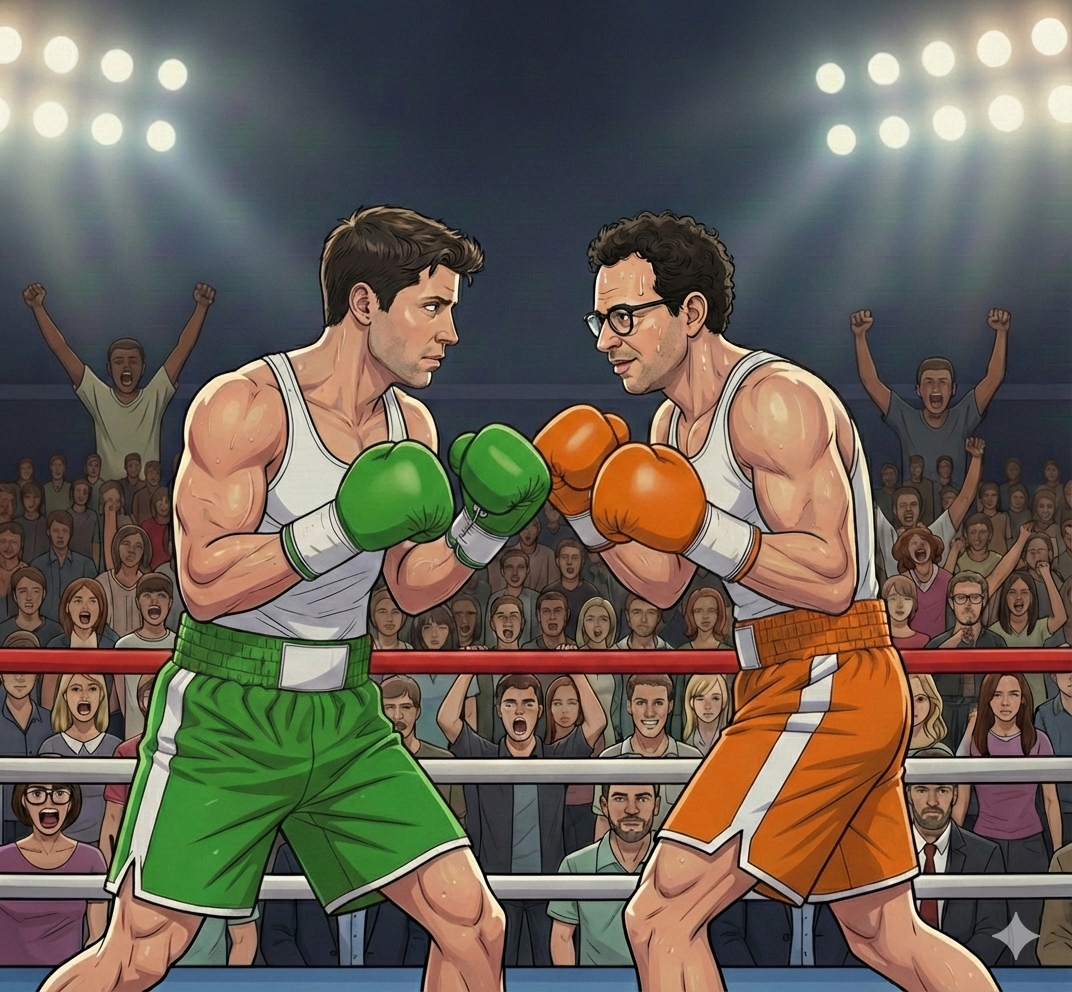
The CASE: Anthropic vs. OpenAI
During the last edition of the Super Bowl (Super Bowl LX), OpenAI's ad was ranked at number 45 within the USA TODAY Ad Meter, titled "You Can Just Build Things", with a score of 2.48 out of 5. And Anthropic ranked at 46 with "Can I Get a Six Pack Quickly?", with a score of 2.45 out of 5, within a ranking of 58 commercials.
Each one had to pay around 8 million dollars for 30 seconds (average), and in some premium slots up to 10 million was reported. (And to that add production costs.)
Was this a good marketing and sales investment? What brand communication objective did each brand want to achieve?
OpenAI's commercial shows various scenarios and closes with "you can create things with Codex", their platform/agent for programming with AI.
Anthropic's: a young man goes out exercising next to a trainer and asks: "can I get a six pack abs quickly?". He says yes... but then he puts "advertising" into it as if it were an ad within the response (that is, trying to sell you a product), making reference to the public conversation about ads in chatbots. It ends with the logo of their Claude model and with the song "What's the Difference".
OpenAI's positioning strategy is: "you can do a lot with Codex", but it's not so clear for the mass audience. And Anthropic uses a differentiation positioning strategy by comparing itself with the leader, because, whether we like it or not, the perceived leader today is OpenAI.
By market share (global reference, January 2026), ChatGPT has around 62% and Claude around 9%.
OpenAI today has an estimated value of approximately 157 billion dollars (valuation reported by Bloomberg in October 2024), and there has been talk that it is seeking a round that could value it at more than 200 billion. Anthropic was valued at approximately 18 billion dollars in its most recent round, reported by Financial Times at the end of 2024, although some analyses suggest it could reach 30 billion in future rounds.
Anthropic's strategy is widely used by Pepsi—in fact, this time they used Coca-Cola's classic polar bears... and that commercial ranked in third place. But... why didn't both commercials work? Is it a good idea to advertise in the Super Bowl? What objectives do you want to achieve?
Both marketing teams, probably, answered: "yes, it's a good idea because we're going to position ourselves". But really, did sales for both increase after the Super Bowl? I don't think so; and not because both commercials were "bad", but because the real objective was perhaps awareness and positioning, not direct sales.
Sam Altman, CEO of OpenAI, responded on X attacking his competitor, basically saying that the commercial was funny, but that it was "clearly dishonest"—because, according to him, it portrays something that OpenAI "wouldn't do" with ads.
He broke an unwritten marketing rule: number one never compares itself with number two, because you elevate them and put them at your level. That's what Coca-Cola does with Pepsi, it never responds to them. But Pepsi always compares itself.
But now let's think: it's Monday after the Super Bowl. Let's go to OpenAI's marketing team.
Imagine that you were in charge of the commercial's strategy. What do you answer? What did you learn? What went right or wrong? Was it an investment? And if it was an investment, how do we measure the return?
Now let's go to Anthropic and do the same exercise: you are the marketer in charge of the strategy. What do you say? Was the investment worth it?
I invite you to reflect: it already happened. How do you move forward? What do you do with the experience to improve as a marketer for next time?
Now let's travel to 2027: do you advertise again or not? And if you advertise, what do you want to achieve? How are you going to measure the effect and return on investment? Because ranking 45 and thinking that "objectives were achieved"... is setting the bar very low, and that's why solid marketing is not done.
Today, what positioning strategy do you recommend to OpenAI as a leader? And if you think they don't have to do anything because "they are leaders", then why did they make an ad? Because Coca-Cola, although it is the leader, continues advertising.
And now let's think about Anthropic: what would you do next year? Are you going to keep "hitting" the leader or are you going to build your own brand essence? The positioning strategy doesn't have to be just "leader's shadow", especially when it has nothing to do with the brand essence and the company's mission.
I don't mean not to use extraordinary or humorous situations, but your storytelling must be grounded in your essence as a company: what is your brand essence, OpenAI? How do you want to be perceived and related to? And the same for Anthropic: who are you and what do you want people to think? But dear reader, what do you think? I'm interested in hearing your opinion.
You can send it to me at carlos.valdez@mercadotecniayventas.com and I'll gladly comment on it in the editorial section.
TECHNICAL INFORMATION
Author: Dr. Carlos Valdez
Date: February 2026
Edition: February 2026
Text Editing: Claude Sonnet 4.5 for spelling correction
Image generated with: Gemini 3 Nano Banana
Publication: Mercadotecnia y Ventas Magazine
© All rights reserved Mercadotecnia y Ventas Magazine 2026. Reproduction is prohibited without the author's permission.
Editorial Syndication: This content is available for syndication.
For editorial licensing or collaborations, contact: carlos.valdez@mercadotecniayventas.com